Diversity of Klebsiella Surface Antigens O and K
01 — Objective: To strengthen a grant proposal by creating tailored, comprehensive visual representations of the structural diversity of Klebsiella surface antigens, while indicating their localization within the bacterial cell membrane.
02 — Material:
Many Klebsiella species can be found in low numbers in a healthy human microbiome; still, opportunistic agents within the genus, including the Klebsiella pneumoniae species complex, Klebsiella oxytoca, and several others, represent long-standing, communicable threats to immunocompromised and otherwise vulnerable individuals —particularly in hospital settings. These conditional pathogens are causative agents of a range of healthcare-associated infections, including nosocomial pneumonia, catheter-associated urinary tract infections (CAUTIs), surgical site and wound abscesses, and fatal sepsis.
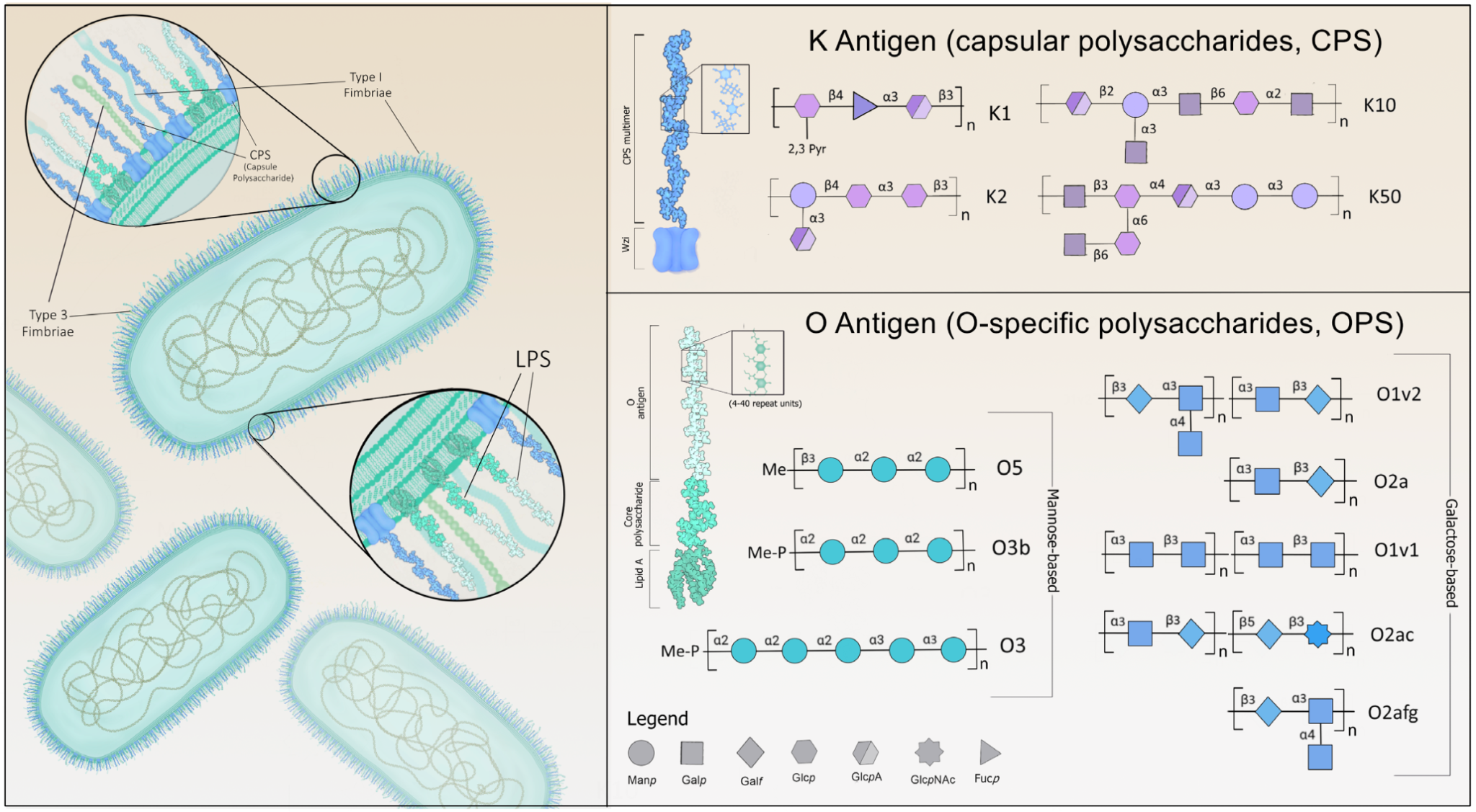
In recent years, emerging hyper-virulent (HV) and multi-drug resistant (MDR) Klebsiella strains have also begun to affect immunocompetent individuals, and now pose a mounting worldwide health concern. These infectious Klebsiella species possess an arsenal of virulence factors that contribute to pathogenicity and assist in evasion of the host immune response. Specifically, factors such as surface O-specific polysaccharides and capsular polysaccharides, or O and K antigens, are uniquely modulated across distinct strains, contributing to the rapidly developing, representative pathologies seen in MDR, HV, and convergent (MDR-hvKp) species.
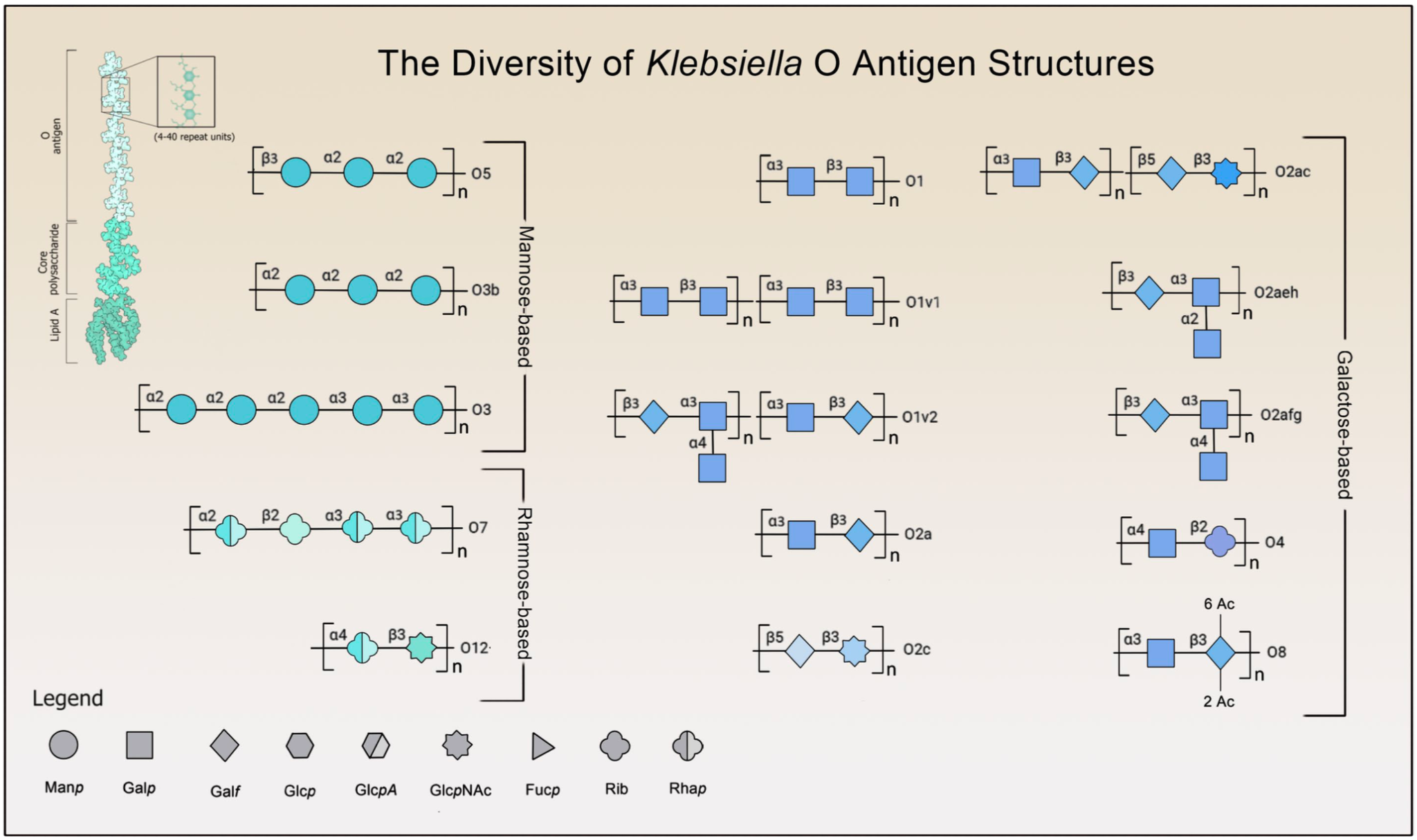
Over the past two decades, multi-drug resistance has been increasingly observed as a regular and concerning feature of severe human infection by opportunistic and hyper-virulent Klebsiella species. The spread of drug resistance forebodes an eventual narrowing of treatment options for Klebsiella infection, while, in parallel, an increase in hyper-virulence abets a concurrent widening of the susceptible population. The role of surface antigenic variation in individuating MDR and HV-specific pathology warrants further characterization of these rapidly-evolving virulence factors. Exploration of novel therapeutic agents and vaccines targeting these antigens denotes a promising strategy to preempt this rising global health threat.
03 — Impact: Directly supported successful acquisition of funding that initiated a new research trajectory for the client’s laboratory. The figures served as lasting reference material for ongoing project documentation and presentations.
Post a comment